THE STORY
From shadows to the stars.
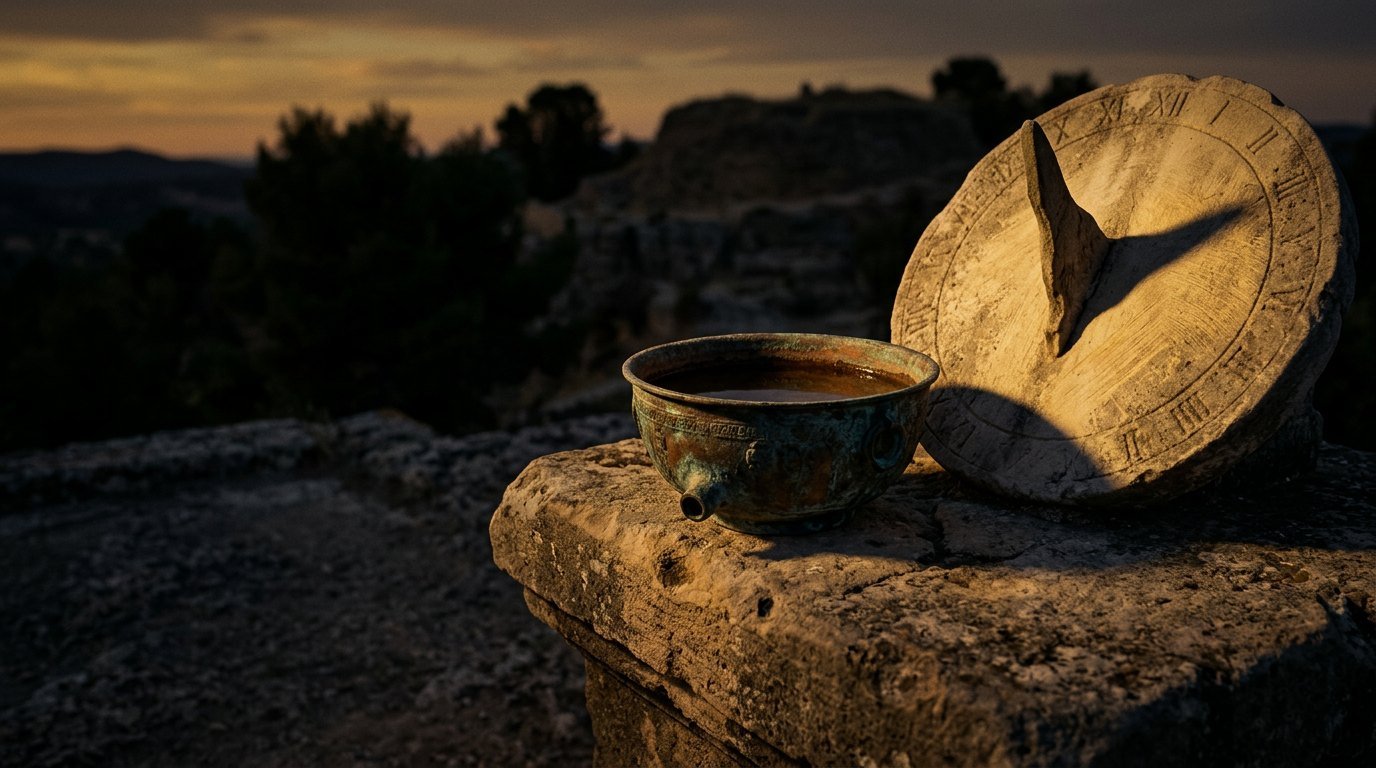
Humanity first read time from shadows and falling water. Every age since has built a better instrument, then patched the calendar to fit. The Zaboliyan Calendar is the next step: time counted from the age of the universe itself.
- c. 1500 BCE
Sundials and water clocks in ancient Egypt read time from shadow and flow.
- 45 BCE
The Julian calendar sets a 365.25 day year. It drifts about 78 days every 10,000 years.
- 1300s
Mechanical clocks ring the hours in European towers.
- 1582
The Gregorian calendar corrects the drift by decree. It still drifts about 3 days every 10,000 years.
- 1656
Christiaan Huygens builds the pendulum clock.
- 1761
John Harrison's marine chronometer finds longitude at sea.
- 1967
The second is redefined by the caesium atom, independent of the Earth.
- 1972 to 2016
27 leap seconds are added to keep clocks in step with a slowing Earth.
- 2022
The world's measurement body votes to end leap seconds by 2035.
- 2026
The Zaboliyan Calendar: one count from the age of the universe, aligned with the Sun, never corrected.